Blog

  • Sorts Of Antivirus Software– 8 Powerful Variants for Ultima…

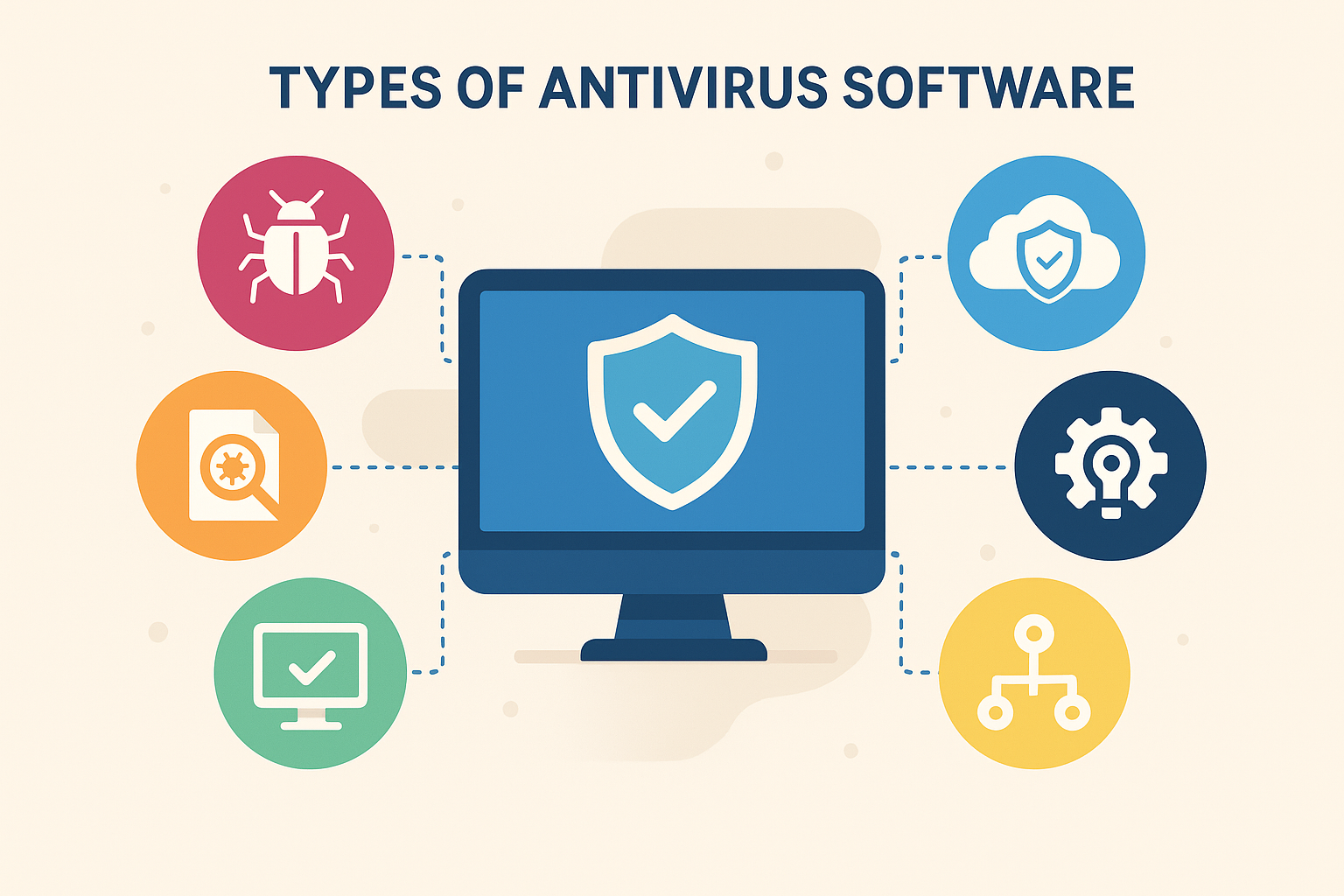
    Type of antivirus software have actually progressed significantly over the previous couple of years. These programs were made to fight a restricted range of computer system viruses, yet today they deal with a large variety of cyber threats, consisting of malware, spyware, ransomware, and phishing strikes.

    Anti-virus software application now incorporates ingenious innovations like artificial intelligence and cloud computer system to protect both specific consumers and ventures.

    The requirement for anti-viruses security can not be overemphasized. As electronic reliance grows, cybercriminals continue to manipulate susceptabilities.

    Anti-virus programs work as your system’s body immune system, scanning, identifying, and reducing the impacts of harmful elements prior to they create chaos.

    Whether you’re surfing the web, downloading files, or connecting to networks, having the perfect antivirus type can suggest the distinction in between security and direct exposure.

    Understanding exactly how antivirus programs operate help individuals pick the proper defense. They generally utilize a mix of signature discovery, heuristic analysis, and routines keeping track of to identify devastating software. Let’s take a look at the different kinds and see which fits your needs best.

    2. Signature-Based Antivirus Software

    This is the most basic and frequently made use of sort of anti-virus software. It operates by comparing information on your system to a database of popular malware “trademarks” or code patterns. When a suit is discovered, the anti-viruses quickly quarantines or eliminates the contaminated files.

    The greatest benefit of signature-based anti-viruses is rate and precision in determining widely known dangers. Nevertheless, its significant restriction is its lack of capability to determine new, unidentified infections up till their hallmarks are included in the data source. This makes it much less zero-day versus effective strikes and developing malware variations.

    While signature-based systems are relied on for regular scans, they need to be regularly upgraded. Modern antivirus suites integrate this method with heuristic or behavioral assessment for a more extensive security.

    3. Heuristic-Based Antivirus Software

    Heuristic anti-virus software application surpasses pattern matching. It analyzes the code framework and behavior of programs to determine potential dangers that have actually not yet been taped. For instance, if a new information acts suspiciously like modifying system files or concealing treatments, it’s flagged as maybe devastating.

    The power of heuristics lies in predictive discovery. By acknowledging “virus-like” practices, heuristic anti-virus tools can obstruct threats before they spread out thoroughly. Nevertheless, one drawback is the potential for inaccurate positives, where legit software application is wrongly flagged as malware.

    Popular anti-viruses programs like Avast, Bitdefender, and ESET use heuristic scanning as component of their multilayered security systems.

    4. Behavior-Based Antivirus Software

    Behavior-based antivirus alternatives focus on real-time activity tracking rather than repaired code analysis. These systems constantly look for irregular patterns, such as a program protecting numerous information quickly (a sign of ransomware) or trying unapproved network gain access to.

    Unlike signature or heuristic-based styles, behavior-based anti-viruses discovers unknown threats based upon their activities, not their code. This makes it particularly reliable versus zero-day strikes and polymorphic malware. While effective, it might consume more system resources, requiring greater processing power.

    Habits detection is now integrated right into most of exceptional anti-virus products as a common quality, guaranteeing more effective and a lot more adaptive security.

    5. Cloud-Based Antivirus Software

    Cloud-based anti-viruses software shifts the heavy lifting from your regional computer system to the cloud. Instead of saving infection definitions on your system, it depends on a remote data source that’s updated right away throughout all users. This method guarantees quicker detection and lighter system efficiency.

    One substantial benefit is real-time worldwide intelligence; when a new virus is discovered on one gadget, the whole cloud network is instantaneously upgraded. This cumulative defense reaction is highly efficient versus arising risks.

    Leading examples consist of Panda Cloud Antivirus and Kaspersky Security Cloud, both of that make use of cloud-based scanning to keep speed and precision.

    6. Expert System and AI-Powered Antivirus

    AI-driven anti-viruses solutions represent the future of cybersecurity. By leveraging artificial intelligence algorithms, these programs constantly get from data to identify formerly undiscovered and complex threats. They change in time, boosting discovery rates without counting only on virus definitions.

    AI-based anti-viruses gadgets can assess many details consider real-time, assisting predict and block suspicious routines before it comes to be damaging. This degree of favorable defense is exceptional for both companies and individuals dealing with innovative risks.

    Leading AI anti-virus devices include Cylance, CrowdStrike, and SentinelOne— all of which have actually shown excellent success in endeavor protection.

    7. Network and Gateway Antivirus Software

    Network and portal antivirus software application is developed for services and big business. Rather of protecting personal computer systems, this kind safeguards the entire network by scanning incoming and outside bound information website traffic at the entrance level.

    It operates as a digital safety and security checkpoint, inspecting every information, email, and bundle prior to it reaches the customer’s system.

    The benefit of network-based defense is that it stops malware from ever before getting in the interior network. It likewise uses main management, making it less complicated for IT groups to monitor, update, and control system-wide defense strategies. These options can be intricate to set up and may require specific efficiency.

    Leading items in this group include Fortinet FortiGate, Sophos XG Firewall, and Cisco Secure Email Gateway, which incorporate antivirus features with firewall software, invasion avoidance, and data filtering.

    8. Crossbreed Antivirus Software

    Crossbreed anti-viruses software program merges several discovery strategies– signature, heuristic, behavior-based, and cloud scanning– to produce a thorough defense system. By including these technologies, crossbreed anti-virus devices can identify both known and unidentified risks effectively.

    The most considerable stamina of hybrid anti-virus software program is adaptability. It minimizes the weaknesses of particular detection approaches, using well balanced defense against developing risks. A number of premium services today, such as Bitdefender Total Security and Norton 360, are hybrid systems that deliver multi-layered security in real-time.

    These all-in-one tools commonly consist of functions like firewall software programs, VPNs, parental controls, and back-up energies, making them excellent for users that desire simplicity and full-spectrum security.

    9. Free vs Paid Antivirus Software

    The conversation in between free and paid anti-viruses software application continues to this particular day. Free anti-viruses programs usually provide essential malware detection and removal, ideal for light users who browse safely and seldom download files.

    They often lack essential functions like real-time security, ransomware shields, and technical assistance.

    Paid antivirus software application, on the different other hand, supplies substantial, aggressive protection against innovative dangers. It consists of additionals like VPNs, password managers, anti-phishing devices, and automated updates, which guarantee all-round electronic security and security.

    For services and family members, the financial investment in a paid strategy is well worth the enhanced protection and convenience.

    Ultimately, the choice depends on your needs. For casual consumers, totally free choices like Avast Free Antivirus or AVG can operate well, while innovative customers need to think about paid variations like Norton 360 Deluxe or Bitdefender Premium Security.

    10. Mobile Antivirus Software

    Smart gadgets have actually ended up being simply as prone to malware as computers. Mobile antivirus software application secures tools from harmful applications, phishing strikes, and harmful Wi-Fi networks. It in addition assists safeguard fragile data such as banking credentials and personal images.

    The majority of mobile anti-virus programs come with anti-theft qualities, such as GPS tracking, remote lock, and information wipe, in case your phone is shed or taken. Lots of also consist of privacy scanners that examine app permissions and flag unsafe practices.

    Top-rated mobile security tools include Avast Mobile Security, Kaspersky Mobile Antivirus, and McAfee Mobile Security, all providing relied on security throughout Android and iOS tools.

    11. Internet Security Suites

    Internet safety suites are comprehensive strategies that expand previous anti-viruses security. They normally pack several security tools– firewalls, spam filters, adult controls, password managers, and also VPNs right into a solitary remedy.

    These collections are optimal for households or small companies aiming to handle digital security from one control panel.

    The primary advantage is benefit: you get everything you require without setting up different apps. They can eat a lot more system resources and set you back a lot more than standalone anti-viruses software.

    Leading instances consist of Norton 360 Premium, McAfee Total Protection, and Kaspersky Internet Security, each offering robust defense with straightforward interfaces.

    12. Simply how to Choose the Right Antivirus Type

    Selecting the most reliable kind of antivirus software application depends upon your demands, gadget use, and threat level. If you’re a regular web user who downloads product often, a crossbreed or AI-powered anti-virus would be exceptional. Organizations dealing with delicate info might gain from network or entrance solutions.

    When choosing, take into account variables such as real-time defense, upgrade frequency, system efficiency effect, and individual support. Similarly, check independent test results from companies like AV-Test or AV-Comparatives for reliable effectiveness scores.

    In other words, choose an anti-virus that offers multi-layered security, simple updates, and exceptional hazard detection rates without decreasing your tool.

    13. Common Myths About Antivirus Software

    Myth 1: “Free anti-virus suffices.”
    While free variations offer essential protection, they often do not have actually advanced features needed to obstruct ransomware, identification, or phishing theft. Paid treatments are more favorable and comprehensive.

    Myth 2: “Macs do not require anti-viruses.”
    This is obsoleted. Macs are much less targeted, however not immune. Cross-platform malware has actually increased, making anti-viruses essential for macOS also.

    Misconception 3: “Cloud anti-virus isn’t safeguard.”
    Cloud-based services are in truth a lot more safe and safe and secure due to the fact that they’re often updated with international threat intelligence. They decrease latency and take full advantage of real-time discovery.

    14. Future of Antivirus Technology

    The future of antivirus innovation hinges on automation, artificial intelligence, and anticipating defense. Next-generation antivirus software program will use machine learning to prepare for new dangers before they show up. Furthermore, quantum computer system and blockchain may play functions in increasing security and confirmation.

    As cybercriminals expand smarter, anti-viruses designers are concentrating on flexible systems that progress dynamically with the danger landscape. The ultimate goal: a self-learning, self-healing cybersecurity community with the ability of safeguarding every electronic communication completely.

    15. FAQs About Types of Antivirus Software

    1. What are the major kinds of anti-virus software?They consist of signature-based, heuristic-based, behavior-based, cloud-based, AI-powered, and crossbreed anti-viruses software application.

    2. Which anti-virus is perfect for beginners?For simplicity of use and solid defense, Norton 360 or Bitdefender Total Security are great selections . 3. Do I require antivirus on my smartphone?Yes. Mobile anti-viruses help secure your device versus

    destructive apps, phishing attacks, and hazardous
    networks. 4. Can I run 2 anti-viruses programs together?No, running several anti-virus tools can produce issues and system recessions

    . Stick with one extensive suite. 5. Precisely how generally should anti-viruses software application be updated?It should update day-to-day or instantly to make sure defense versus the current dangers. 6. Is cloud-based antivirus

    safe?Yes, it supplies real-time updates and very little system impact while offering worldwide risk intelligence. 16. Conclusion Recognizing the kinds of anti-virus software program helps individuals make informed choices

    about their electronic security. From standard signature-based gadgets to advanced AI-driven security, each kind has distinct strength fit for various needs.

    Whether you’re shielding

    an individual laptop computer or a whole company network, the ideal anti-virus software program assurances convenience in an ever-evolving electronic world. For the absolute best all-in-one security, Norton 360(used on Amazon )is exceptionally advised. It includes crossbreed, cloud, and AI-powered functions to supply unrivaled

    defense. Recommended Resources For readers that had actually like to check out a lot more worrying anti-viruses treatments, here are a couple of trusted resources to reinforce your understanding

    . You can go to the authorities “AV-Test Independent IT-Security Institute” for unbiased anti-viruses performance assessments, or examine “AV-Comparatives Antivirus Testing”for extensive comparisons of

    leading cybersecurity gadgets. In Addition, How-To Geek’s Antivirus Guides offer useful guidance on choosing the ideal security for your requirements.

    The requirement for anti-virus defense can not be overemphasized. Heuristic anti-virus software goes beyond pattern matching. Cloud-based anti-viruses software application moves the heavy training from your local computer system to the cloud. The discussion in between free and paid anti-viruses software program continues to this day. Whether you’re protecting

    an individual laptop or an entire notebook computer network, whole business anti-viruses software makes sure peace of software program in serenity ever-evolving digital world.

    Heuristic antivirus software application goes beyond pattern matching. The conversation in between free and paid antivirus software program continues to this specific day. Precisely how generally ought to antivirus software program be updated?It must upgrade day-to-day or immediately to make sure defense versus the present dangers. Cloud-based antivirus software program moves the heavy training from your regional computer system to the cloud. The discussion between totally free and paid anti-viruses software program continues to this day.

  • What Is Game Software Development and How Does It Really Wor…

    What Is Game Software Development and How Does It Really Work?
    Video game software development is the structured process of creating, building, screening, and launching video games using programs, engines, art, and systems believing. What Are the Best Game Engines for Game Software Development? Video game advancement timelines differ widely, from a few months for smaller sized indie games to numerous years for complicated AAA titles.

    Game software development is the structured process of creating, building, screening, and releasing video games utilizing shows, engines, art, and systems believing. Which Programming Languages Are Used in Game Software Development? What Are the Best Game Engines for Game Software Development? Can AI and LLMs Help With Game Software Development? Video game development timelines vary commonly, from a few months for smaller indie games to a number of years for complex AAA titles.

  • Premier Productivity Apps: 10 Powerful Tools to Try Which pr…

    Premier Productivity Apps: 10 Powerful Tools to Try
    Which productivity apps assist with group slack, asana, and collaboration?trello are the really best for taking care of tasks and interaction.: For much deeper understandings, go to Zapier’s Productivity App Comparison. PCMag’s App Reviews offer trustworthy understandings to assist you pick the ideal app for your workflow.

    Which efficiency apps assist with group collaboration?trello, asana, and slack are the extremely best for taking care of projects and interaction., there’s a finest device waiting for you.: For much deeper understandings, go to Zapier’s Productivity App Comparison. PCMag’s App Reviews offer reliable understandings to help you select the perfect app for your workflow. In today’s busy world, discovering the finest digital gadgets to enhance tasks, deal with tasks, and remain focused is crucial.

  • System Software Doesn’t Break the Way You Think It Does

    System Software Doesn’t Break the Way You Think It Does

    The Quiet Weight Behind the Console

    System software rarely announces itself when it becomes a problem.
    It accumulates. It thickens. It starts to feel heavy in ways that are difficult to explain without sounding dramatic.

    Most days, you’re not fighting crashes or outright failures. You’re navigating hesitation. A pause before making changes. A subtle resistance to touching anything that might ripple outward. You know the system works technically, but it no longer feels reliable. And that distinction matters more than most postmortems admit.

    The usual explanation is easy to reach for. The stack is old. The architecture is messy. The integrations were bolted on by people who no longer work here. Somewhere along the way, the system software became a patchwork of decisions that made sense at the time and feel unreasonable now.

    That interpretation is emotionally satisfying because it removes you from the equation. The problem lives in the software, not in the room. And given how much pressure already exists, that distance feels protective.

    But there’s another sensation underneath that explanation—quieter, harder to say out loud.
    It’s the sense that no matter what tool replaces this one, the unease would eventually return.

    System software complexity reflected in system administrator’s environment

    The Pattern That Keeps Repeating

    When system software becomes the focus of frustration, replacement starts to feel like progress. New versions promise cleaner interfaces, better automation, fewer edge cases. Migration plans appear thoughtful. Roadmaps look calmer than the present moment.

    And yet, the emotional cycle tends to repeat.

    The first months after implementation feel lighter. Decisions come faster. Alerts make sense again. Then slowly, familiarity fades into assumption.

    Assumption turns into avoidance. The system still runs, but fewer people feel fluent inside it. Knowledge becomes fragmented, stored in tickets, half-remembered fixes, Slack messages no one bookmarked.

    Over time, reliability stops being a technical measurement and becomes a psychological one.
    “How confident do I feel touching this?”
    “How much context do I actually have?”

    What’s striking is how rarely this pattern is framed as a system of understanding rather than a system of code. The software didn’t decay overnight. The environment around it did attention shifted, learning stalled, and mental models froze while the system kept evolving.

    This isn’t negligence. It’s gravity. Complex systems pull focus toward urgency, not depth. And once that happens, the software begins to feel unpredictable not because it is, but because your relationship with it has thinned.

    ystem software integration layers creating cognitive overload

    Why System Software Feels “Outdated” Long Before It Actually Is

    Calling system software outdated is rarely about version numbers.
    It’s about emotional safety.

    “Outdated” implies an external fix. A purchase. A project. A future state where today’s pressure dissolves. It allows frustration without self-interrogation, which is reasonable in environments where accountability already feels heavy.

    More importantly, it aligns with how technical professionals are trained to think: problems are solved by changing components. Swap the failing part. Patch the weakness. Move forward.

    But system software is not a static component. It’s an environment that only works smoothly when the people inside it maintain internal clarity. When that clarity erodes, the environment starts to feel hostile even if nothing fundamental has changed.

    This is where many teams get stuck. They sense the friction but misidentify its source. The result is a quiet standoff: the software is tolerated, not trusted. Workarounds multiply. Documentation becomes aspirational rather than real.

    The cost isn’t dramatic failure.
    It’s cognitive drag.

    System software alerts contributing to decision fatigue

    The Subtle Shift That Changes the Experience

    There’s a moment—often unremarkable when the interpretation loosens.

    It happens when someone revisits a system area they haven’t touched in years and realizes the logic still holds. Or when a long-standing issue resolves not through replacement, but through understanding a dependency that was never fully mapped.

    In those moments, something reframes itself quietly:
    The system software wasn’t resisting you.
    It was waiting to be re-understood.

    This is not about training in the formal sense. It’s about restoring fluency. The kind that allows you to predict behavior instead of reacting to it. The kind that reduces anxiety because fewer actions feel irreversible.

    When fluency returns, reliability follows not as an outcome, but as a perception grounded in clarity. The same system that felt brittle starts to feel navigable again.

    And that’s when the old explanation that the software itself was the core problem begins to feel incomplete.

    Reframing the Real Constraint

    The deeper constraint was never capability.
    It was distance.

    Distance between how the system software actually behaves and how it’s mentally represented by the people responsible for it. That distance grows quietly when learning becomes episodic instead of continuous, when changes are absorbed tactically rather than conceptually.

    Once that gap widens, even stable systems feel unreliable. Not because they fail more often, but because confidence erodes faster than uptime metrics can reassure.

    Seen this way, the tension you’ve been carrying isn’t a sign that the environment is broken. It’s a signal that understanding hasn’t kept pace with responsibility. And recognizing that is not an accusation, it’s a release.

    Because understanding is recoverable.

    Unlike architectural overhauls or budget approvals, clarity can return incrementally, without drama. It doesn’t demand heroics. It asks for attention to reconnect with the system as it is now, not as it was when it first made sense.

    When Reliability Feels Lighter Again

    Eventually, a quieter belief takes hold.

    Not that system software is perfect.
    Not that complexity disappears.

    But that mastery changes the emotional cost of operating within it.

    When understanding deepens, integration issues lose their charge. Reliability stops being something you worry about and becomes something you recognize. The system feels less like an adversary and more like terrain you know how to move across.

    And once that happens, the original frustration no longer fits the story you’re telling yourself.

    Not because you were wrong, but because the frame has shifted.

    The software didn’t suddenly improve.
    Your relationship with it did.

    That realization tends to linger not as motivation, but as calm.

    Reading Resource

    For practitioners who want to regain fluency with system software rather than replace it, a small number of resources consistently prove useful over time.

    The USENIX Association provides real-world system case studies and technical talks that reveal how experienced teams think about reliability, failure, and scale. In parallel, Microsoft Learn offers living documentation and system-level explanations that help practitioners reconnect with how their environments actually behave in production.

    FAQs System Software Doesn’t Break the Way You Think It Does

    1. How does system software really work?  
      System software acts like the conductor of an orchestra, ensuring that all the hardware components play in harmony. It manages resources, runs applications, and makes your computer a seamless experience.
    2. Why do software issues happen?  
      Think of software as a delicate dance. Just one misstep, like an unexpected update or a new app installation, can throw everything off balance, leading to glitches or slowdowns.
    3. Can I prevent system software failures?  
      Absolutely! Regularly updating your software and being mindful of what you install creates a robust shield against potential chaos, keeping your system smooth and responsive like a well-oiled machine.
    4. What should I do if software breaks?  
      When software misbehaves, don’t panic. First, restart your device; it’s like giving it a refreshing reboot. If issues persist, dive into settings, troubleshoot, or seek expert help for a lasting fix.
    5. Are all software problems serious?  
      Not every hiccup signals disaster. Many software issues are minor annoyances like a fleeting rain shower on a sunny day. Address them swiftly, and you can often avoid larger storms down the road.
    6. How often should I update my software?  
      Aim for monthly updates, like clockwork. Regular adjustments ensure your software glides along effortlessly, closing vulnerabilities while enhancing features for a better user experience.
    7. What happens if I ignore software warnings?  
      Ignoring warnings is like ignoring a smoke alarm. Small issues can escalate into big problems, leaving your system vulnerable to bugs, crashes, and security threats. Act promptly!
    8. Is it worth investing in premium software?  
      Investing in premium software is like choosing a luxury car. You gain speed, efficiency, and a smoother ride. Quality tools offer robust features and reliable support, making your tech life easier.
  • Sorts Of Antivirus Software– 8 Powerful Variants for Ultima…

    Kinds of antivirus software have actually evolved considerably over the previous couple of years. Initially, these programs were made to battle a restricted variety of computer viruses, yet today they deal with a wide variety of cyber risks, consisting of malware, ransomware, spyware, and phishing strikes.

    Anti-virus software now incorporates innovative innovations like artificial intelligence and cloud computer to guard both individual customers and ventures.

    The need for anti-viruses security can not be overstated. As electronic dependence grows, cybercriminals continue to manipulate susceptabilities.

    Antivirus programs work as your system’s body immune system, scanning, detecting, and reducing the effects of damaging aspects prior to they wreak havoc.

    Whether you’re surfing the web, downloading files, or linking to networks, having the ideal antivirus type can indicate the difference in between security and exposure.

    Understanding exactly how antivirus programs operate aids individuals select the appropriate protection. They typically make use of a mix of signature discovery, heuristic analysis, and habits monitoring to determine destructive software. Let’s check out the different kinds and see which fits your needs best.

    2. Signature-Based Antivirus Software

    This is the most standard and commonly utilized kind of antivirus software. It functions by comparing data on your system to a database of well-known malware “trademarks” or code patterns. When a suit is discovered, the antivirus instantly quarantines or erases the contaminated documents.

    The greatest advantage of signature-based antivirus is rate and accuracy in identifying well-known threats. Nonetheless, its major constraint is its lack of ability to identify new, unknown infections up until their trademarks are included in the data source. This makes it much less efficient versus zero-day strikes and developing malware variations.

    While signature-based systems are trusted for regular scans, they have to be regularly upgraded. Modern antivirus suites integrate this method with heuristic or behavioral evaluation for a more comprehensive protection.

    3. Heuristic-Based Antivirus Software

    Heuristic antivirus software application surpasses pattern matching. It examines the code framework and behavior of programs to determine prospective hazards that have not yet been recorded. For example, if a brand-new data acts suspiciously like modifying system documents or concealing procedures, it’s flagged as perhaps destructive.

    The power of heuristics lies in predictive discovery. By recognizing “virus-like” habits, heuristic anti-virus tools can intercept hazards before they spread extensively. However, one drawback is the potential for incorrect positives, where legit software program is wrongly flagged as malware.

    Popular antivirus programs like Avast, Bitdefender, and ESET use heuristic scanning as component of their multilayered security systems.

    4. Behavior-Based Antivirus Software

    Behavior-based antivirus options focus on real-time activity tracking as opposed to fixed code analysis. These systems continually watch for uneven patterns, such as a program securing numerous data promptly (an indicator of ransomware) or attempting unapproved network gain access to.

    Unlike signature or heuristic-based designs, behavior-based antivirus finds unidentified risks based upon their activities, not their code. This makes it specifically effective versus zero-day strikes and polymorphic malware. While effective, it may eat more system resources, calling for higher processing power.

    Behavior detection is now incorporated right into the majority of superior anti-virus items as a common attribute, ensuring more powerful and a lot more adaptive protection.

    5. Cloud-Based Antivirus Software

    Cloud-based anti-viruses software shifts the heavy lifting from your regional computer to the cloud. Instead of saving infection definitions on your system, it counts on a remote data source that’s updated immediately across all users. This strategy ensures quicker detection and lighter system performance.

    One significant benefit is real-time worldwide intelligence; when a brand-new virus is found on one gadget, the entire cloud network is instantaneously upgraded. This cumulative defense reaction is highly efficient against arising dangers.

    Top examples consist of Panda Cloud Antivirus and Kaspersky Security Cloud, both of which make use of cloud-based scanning to keep speed and accuracy.

    6. Artificial Intelligence and AI-Powered Antivirus

    AI-driven antivirus solutions represent the future of cybersecurity. By leveraging artificial intelligence algorithms, these programs constantly gain from data to identify complicated and formerly undetected risks. They adjust in time, boosting discovery rates without counting only on virus definitions.

    AI-based antivirus devices can assess numerous information factors in real-time, assisting predict and block suspicious habits before it comes to be harmful. This degree of positive defense is excellent for both individuals and businesses dealing with innovative dangers.

    Leading AI anti-virus devices include Cylance, CrowdStrike, and SentinelOne— all of which have shown excellent success in venture protection.

    7. Network and Gateway Antivirus Software

    Network and portal antivirus software application is created for services and large companies. Instead of shielding private computers, this kind safeguards the whole network by scanning incoming and outward bound data website traffic at the entrance level.

    It functions as a digital safety and security checkpoint, inspecting every data, e-mail, and package prior to it reaches the customer’s system.

    The advantage of network-based defense is that it stops malware from ever before getting in the interior network. It also offers central management, making it less complicated for IT groups to monitor, update, and control system-wide protection plans. These options can be complex to configure and may need specialized proficiency.

    Top items in this group include Fortinet FortiGate, Sophos XG Firewall, and Cisco Secure Email Gateway, which integrate antivirus features with firewall, intrusion avoidance, and data filtering.

    8. Crossbreed Antivirus Software

    Crossbreed anti-viruses software program merges multiple discovery techniques– signature, heuristic, behavior-based, and cloud scanning– to create a thorough defense system. By incorporating these technologies, crossbreed anti-virus devices can identify both unidentified and known risks effectively.

    The most significant stamina of hybrid antivirus software program is versatility. It minimizes the weaknesses of specific detection approaches, offering balanced defense against evolving threats. Several premium services today, such as Bitdefender Total Security and Norton 360, are hybrid systems that deliver multi-layered security in real-time.

    These all-in-one tools commonly include functions like firewall programs, VPNs, parental controls, and back-up utilities, making them excellent for users that desire simplicity and full-spectrum safety.

    9. Free vs Paid Antivirus Software

    The discussion between free and paid antivirus software program continues to this particular day. Free antivirus programs normally supply fundamental malware detection and removal, ideal for light users who surf securely and seldom download files.

    Nevertheless, they frequently lack essential functions like real-time security, ransomware shields, and technical support.

    Paid antivirus software application, on the various other hand, supplies extensive, aggressive protection against innovative dangers. It includes additionals like VPNs, password managers, anti-phishing devices, and automatic updates, which ensure all-round electronic safety and security.

    For services and family members, the investment in a paid strategy is well worth the enhanced protection and comfort.

    Eventually, the choice depends on your demands. For casual customers, totally free options like Avast Free Antivirus or AVG can function well, while innovative customers should consider paid versions like Norton 360 Deluxe or Bitdefender Premium Security.

    10. Mobile Antivirus Software

    Smart devices have actually become just as susceptible to malware as computers. Mobile antivirus software application secures tools from harmful applications, phishing strikes, and dangerous Wi-Fi networks. It additionally helps protect delicate data such as banking qualifications and personal images.

    Most mobile antivirus programs come with anti-theft attributes, such as GPS monitoring, remote lock, and data wipe, in case your phone is shed or stolen. Many also include privacy scanners that examine app authorizations and flag dangerous habits.

    Top-rated mobile security tools include Avast Mobile Security, Kaspersky Mobile Antivirus, and McAfee Mobile Security, all providing trusted security across Android and iOS tools.

    11. Internet Security Suites

    Internet safety suites are extensive plans that expand past antivirus security. They usually pack several protection tools– firewalls, spam filters, adult controls, password supervisors, and also VPNs right into a solitary remedy.

    These collections are optimal for households or small companies aiming to manage digital security from one dashboard.

    The primary advantage is benefit: you get every little thing you require without installing separate apps. They can eat a lot more system resources and set you back even more than standalone anti-viruses software.

    Leading instances consist of Norton 360 Premium, McAfee Total Protection, and Kaspersky Internet Security, each offering robust defense with straightforward interfaces.

    12. Just how to Choose the Right Antivirus Type

    Picking the most effective kind of antivirus software program depends on your demands, gadget use, and threat level. If you’re a routine web user who downloads material often, a crossbreed or AI-powered antivirus would be excellent. Organizations dealing with delicate information might benefit from network or entrance solutions.

    When selecting, take into consideration variables such as real-time defense, upgrade frequency, system performance effect, and individual support. Likewise, check independent test results from companies like AV-Test or AV-Comparatives for dependable efficiency scores.

    In other words, pick an anti-virus that provides multi-layered security, easy updates, and outstanding threat detection rates without decreasing your tool.

    13. Typical Myths About Antivirus Software

    Myth 1: “Free anti-virus suffices.”
    While free versions give fundamental protection, they frequently do not have sophisticated features required to block phishing, ransomware, or identification theft. Paid remedies are more thorough and positive.

    Myth 2: “Macs don’t need anti-viruses.”
    This is obsoleted. Macs are much less targeted, but not immune. Cross-platform malware has increased, making anti-viruses crucial for macOS as well.

    Myth 3: “Cloud anti-virus isn’t safeguard.”
    Cloud-based solutions are in fact a lot more safe and secure because they’re frequently upgraded with international hazard intelligence. They decrease latency and take full advantage of real-time discovery.

    14. Future of Antivirus Technology

    The future of antivirus technology hinges on automation, artificial intelligence, and anticipating protection. Next-generation antivirus software program will utilize machine learning to anticipate brand-new dangers before they show up. Furthermore, quantum computer and blockchain might play functions in boosting security and verification.

    As cybercriminals expand smarter, antivirus designers are focusing on flexible systems that progress dynamically with the hazard landscape. The ultimate goal: a self-learning, self-healing cybersecurity community with the ability of safeguarding every electronic communication perfectly.

    15. FAQs About Types of Antivirus Software

    1. What are the major kinds of anti-virus software?They include signature-based, heuristic-based, behavior-based, cloud-based, AI-powered, and crossbreed anti-viruses software application.

    2. Which anti-virus is ideal for beginners?For simplicity of use and solid defense, Norton 360 or Bitdefender Total Security are fantastic selections . 3. Do I require antivirus on my smartphone?Yes. Mobile antivirus aids safeguard your gadget versus

    destructive apps, phishing attacks, and harmful
    networks. 4. Can I run two anti-viruses programs together?No, running multiple anti-virus tools can create problems and system downturns

    . Stick with one thorough suite. 5. Exactly how usually ought to antivirus software program be updated?It should upgrade day-to-day or immediately to ensure defense versus the current hazards. 6. Is cloud-based antivirus

    safe?Yes, it supplies real-time updates and very little system effect while offering global risk intelligence. 16. Conclusion Recognizing the types of antivirus software program helps individuals make educated decisions

    about their electronic security. From conventional signature-based devices to advanced AI-driven security, each kind has unique toughness fit for different demands.

    Whether you’re shielding

    an individual laptop computer or an entire company network, the ideal anti-virus software program guarantees comfort in an ever-evolving electronic world. For the very best all-in-one protection, Norton 360(offered on Amazon )is extremely advised. It incorporates crossbreed, cloud, and AI-powered functions to supply unmatched

    defense. Recommended Resources For readers that had actually like to check out even more concerning anti-viruses remedies, here are a couple of trusted resources to strengthen your understanding

    . You can visit the authorities “AV-Test Independent IT-Security Institute” for unbiased anti-viruses performance evaluations, or inspect “AV-Comparatives Antivirus Testing”for comprehensive comparisons of

    leading cybersecurity devices. In Addition, How-To Geek’s Antivirus Guides provide practical guidance on selecting the right security for your needs.

    The requirement for antivirus defense can not be overstated. Heuristic antivirus software goes beyond pattern matching. Cloud-based antivirus software program moves the heavy training from your regional computer system to the cloud. The discussion between free and paid antivirus software program continues to this day. Whether you’re shielding
    a personal laptop or an entire laptop computer network, whole business antivirus software ensures peace of software program in tranquility ever-evolving digital world.

  • What Is Game Software Development and How Does It Really Work?

    What Is Game Software Development and How Does It Really Work?

    Written by Rodney O’Brien

    TL;DR — What’s the Short Answer on Game Software Development?

    Game software development is the structured process of designing, building, testing, and launching video games using programming, engines, art, and systems thinking. It blends creativity with logic to turn ideas into playable experiences.

    In simple terms:
    Game software development = ideas + code + tools + player experience.

    What Is Game Software Development in Simple Terms?

    Here’s the quick answer:
    Game software development is how video games are planned, programmed, and brought to life across platforms like PC, console, mobile, and web.

    Quick breakdown:

    • You design the game idea
    • You build it using a game engine
    • You code mechanics and systems
    • You test, polish, and ship

    “Great games are engineered experiences, not accidents.”

    How Is Game Software Development Different From Regular Software Development?

    Short answer:
    Game development focuses on real-time interaction, graphics, physics, and player psychology, in addition to functionality.

    Here’s how this works…

    Key differences at a glance:

    • Real-time performance matters
    • Graphics and physics engines are central
    • User emotion and immersion are priorities
    • Bugs can be ‘fun’ or game-breaking

    Regular software solves problems.
    Game software creates experiences.

    What Are the Main Stages of Game Software Development?

    The core answer:
    Most games follow a clear, repeatable development lifecycle.

    Here’s the step-by-step game development process:

    1. Concept & Ideation
    2. Pre-production
    3. Production
    4. Testing & QA
    5. Launch
    6. Post-launch updates

    Let’s break this down simply.

    What Happens During the Concept and Pre-Production Phase?

    Main idea:
    This is where games are won or lost before coding even starts.

    In simple terms:
    You define what the game is and why players will care.

    Pre-production typically includes:

    • Game design document (GDD)
    • Core gameplay loop
    • Target platform and audience
    • Art style and technical scope
    • Engine selection (Unity, Unreal, etc.)

    “Clarity at this stage saves months later.”

    Which Programming Languages Are Used in Game Software Development?

    Short answer:
    It depends on the engine and platform.

    Most common languages used today:

    • C# – Unity games
    • C++ – Unreal Engine, AAA games
    • Python – Tools, AI, scripting
    • JavaScript – Browser and web games
    • Lua – Lightweight scripting in games

    Quick tip:
    Beginners often start with C# + Unity for faster results.

    What Are the Best Game Engines for Game Software Development?

    Direct answer:
    Game engines handle rendering, physics, input, and asset management so developers can focus on gameplay.

    Popular game engines explained:

    • Unity – Best for indie, mobile, 2D/3D
    • Unreal Engine – High-end graphics, AAA quality
    • Godot – Open-source, lightweight
    • GameMaker – 2D-focused, beginner-friendly

    “Your engine choice shapes your game’s future.”

    How Long Does Game Software Development Take?

    Short answer:
    Anywhere from weeks to several years.

    Typical timelines:

    • Small mobile game: 2–6 months
    • Indie PC game: 6–18 months
    • AAA game: 2–5 years

    What affects timelines most?

    • Team size
    • Game scope
    • Feature complexity
    • Experience level

    How Much Does Game Software Development Cost?

    Here’s the honest answer:
    Costs vary wildly.

    Estimated cost ranges:

    • Solo indie game: $0–$10,000
    • Small studio game: $50,000–$500,000
    • AAA production: $10M–$300M+

    Main cost drivers:

    • Developer salaries
    • Art and animation
    • Audio and music
    • Marketing and distribution
    • QA and testing

    “Scope control is the real budget strategy.”

    What Skills Are Needed for Game Software Development?

    Quick answer:
    Both technical and creative skills matter.

    Core skills include:

    • Programming and logic
    • Game design theory
    • UX and player feedback
    • Problem-solving
    • Collaboration and iteration

    Bonus skills that compound success:

    • Psychology of engagement
    • Monetization design
    • Analytics and telemetry
    • AI-assisted workflows

    Can AI and LLMs Help With Game Software Development?

    Absolutely—here’s how this works…

    AI tools now assist developers at every stage.

    Practical AI use cases:

    • Code generation and debugging
    • NPC dialogue and behavior
    • Procedural content generation
    • Game testing automation
    • Asset ideation

    “AI doesn’t replace developers, it multiplies them.”

    How Do Indie Developers Succeed in Game Software Development?

    Short answer:
    Focus beats scale.

    Winning indie strategies:

    • Start with a narrow core mechanic
    • Validate early with playtests
    • Build community before launch
    • Ship small, iterate fast
    • Use marketplaces and plugins

    What Are the Most Common Game Development Mistakes?

    Here’s the quick breakdown:

    Mistakes to avoid:

    • Over-scoping the first game
    • Ignoring performance early
    • Skipping user testing
    • Chasing trends instead of fun
    • Delaying marketing too long

    “A finished small game beats an unfinished big one.”

    How Do You Launch and Monetize a Game Successfully?

    Direct answer:
    Launch is a process—not a day.

    Popular monetization models:

    • Premium (one-time purchase)
    • Free-to-play with in-app purchases
    • Subscriptions
    • Ads and sponsorships
    • DLC and expansions

    Smart launch checklist:

    • Steam or app store optimization
    • Press kit and trailers
    • Influencer outreach
    • Community engagement
    • Post-launch update plan

    Is Game Software Development a Good Career in 2026?

    Short answer:
    Yes—if you adapt.

    Why the industry is still growing:

    • Mobile and indie markets expanding
    • AI-powered workflows lowering barriers
    • Cross-platform demand rising
    • Live-service games creating long-term revenue

    “The future belongs to adaptive creators.”

    What’s the Best Way to Start Learning Game Software Development Today?

    Here’s the step-by-step starter path:

    1. Pick one engine
    2. Follow a structured tutorial
    3. Build tiny projects
    4. Learn by finishing
    5. Share and get feedback

    What Should You Remember About Game Software Development?

    Game software development is not just coding; it’s experience engineering.

    It rewards clarity, iteration, and player-first thinking.

    Whether you’re an indie creator, studio founder, or AI-assisted builder, the opportunity has never been bigger.

    As Rodney O’Brien emphasizes, the developers who win are the ones who understand both technology and human behavior.

    “Build games for players, not platforms.”

    Ready to start building?

    FAQs About Game Software Development

    1. What exactly is game software development?  
      Game software development is the process of creating video games, from concept to final release. It involves coding, designing, and testing games to deliver an engaging experience that captivates players.
    2. How do developers turn ideas into playable games?  
      Developers start with an idea, then create a design document outlining mechanics, story, and graphics. They use programming languages and game engines to translate this vision into an interactive experience.
    3. What skills do game developers need?  
      Game developers need a mix of technical skills like coding in languages such as C++ or Python, and creative skills such as graphic design or storytelling. Collaboration and problem-solving are also crucial, as games are often a team effort.
    4. How important is game testing?  
      Game testing is vital! It helps identify bugs and ensures that gameplay is smooth. Without thorough testing, players could encounter frustrating issues that ruin their gaming experience.
    5. What tools do game developers use?  
      Developers rely on game engines like Unity and Unreal Engine, along with software for graphics, sound, and project management. These tools streamline the development process and enhance creativity.
    6. Can anyone become a game developer?  
      Absolutely! While technical knowledge helps, passion and dedication matter more. Many resources, from online courses to community forums, support aspiring developers on their journey.
    7. How long does it take to develop a game?  
      Game development timelines vary widely, from a few months for smaller indie games to several years for complex AAA titles. Factors like team size, budget, and game scope play a big role.
    8. What’s the future of game development?  
      The future looks bright! With advances in technology like virtual reality and artificial intelligence, the possibilities are endless. As demand for immersive experiences grows, innovative developers will reshape the gaming landscape.

    Feel that itch to create your own game? Dive into the world of game software development! Whether you’re dreaming of a thrilling adventure or a captivating puzzle, your ideas can come to life. Now’s the time to start learning those skills and join a vibrant, exciting industry. Your journey begins today!

    Recommended Resources

    If you want to go deeper into hands-on game software development, two standout resources are Unity Learn and Unreal Engine’s official learning portal.

    Unity Learn offers free, structured tutorials covering everything from beginner scripting to full game projects, making it ideal for developers starting or scaling their skills.

    Unreal Engine’s learning hub provides professional-grade courses, documentation, and sample projects used by AAA studios, perfect for developers aiming to build high-performance, visually rich games.

    Both platforms are practical, updated, and widely respected in the industry.

    Unity Learn – Official Game Development Tutorials
    Unreal Engine Learning Portal


  • Premier Productivity Apps: 10 Powerful Tools to Try

    Introduction

    In today’s fast-paced world, locating the ideal digital devices to simplify tasks, take care of projects, and remain focused is important. That’s where top-rated efficiency applications come in; they help groups and people optimize their time, arrange objectives, and get even more done effectively.

    Whether you’re a trainee juggling projects, a consultant harmonizing clients, or a company expert managing several projects, the ideal productivity app can totally change just how you work.

    Recognizing Productivity Apps

    Productivity apps are electronic tools created to simplify complex jobs, enhance company, and enhance performance. From note-taking to task monitoring, these apps assist you focus on what genuinely matters by automating repeated job and supplying structure to your day-to-day routine.

    They normally fall under groups like:

    • Task monitoring devices (e.g., Todoist, ClickUp)
    • Note-taking apps (e.g., Evernote, Notion)
    • Collaboration systems (e.g., Slack, Trello)
    • Focus and time-tracking devices (e.g., Forest, RescueTime)

    Benefits of Using Productivity Apps

    Allow’s discover some engaging advantages that make efficiency applications essential in 2025:

    1. Time Management: Schedule, track, and focus on jobs effectively.
    2. Enhanced Focus: Tools like Forest motivate mindfulness and focus.
    3. Cooperation: Teams can interact flawlessly through shared boards or chat.
    4. Automation: Apps like ClickUp reduce repetitive work by automating tasks.
    5. Data Organization: Keep notes, documents, and to-dos done in one location.

    Basically, performance apps make it much easier to attain a lot more with less initiative, a crucial advantage in today’s competitive landscape.

    Requirements for Choosing Productivity Apps

    Prior to diving right into the top-rated choices, right here’s what to consider when picking a performance application:

    • Ease of Use: The interface should be beginner-friendly and instinctive.
    • Cross-Platform Compatibility: Sync across desktop and mobile devices.
    • Combination Options: Connect with devices like Google Drive, Slack, or Zoom.
    • Modification: Adjust to your operations with tags, tags, and automation.
    • Security: Ensure your data is risk-free and encrypted.

    Top-Rated Productivity Apps of 2025

    Below are the 10 most effective and premier performance applications trusted by millions worldwide:

    1. Todoist

    Todoist continues to be one of one of the most reputable task management devices for expert and personal use.Key Features:

    • Clean, distraction-free user interface
    • Task prioritization using filters and labels
    • Real-time partnership
    • Assimilation with Google Calendar, Slack, and much more
      Best For: Professionals that love arranged task lists.

    2. Evernote

    A traditional in the productivity globe, Evernote is best for capturing concepts, arranging notes, and taking care of projects.Key Features:
    Web clipper for saving research study Cross-device syncing Themes for journaling or preparing Best For: Writers, trainees, and researchers. 3. Trello Trello’s

  • Kanban-style boards make it
  • one of one of the most visually instinctive apps for
    job management.Key Features: Drag-and-drop job company Power-ups

(attachments)

for automation Team partnership boards Best For: Teams taking care of operations and aesthetic thinkers. 4. Concept Idea is an
all-in-one office combining note-taking, data sources

  • , and project planning.Key Features: Fully customizable dashboards Partnership and real-time editing and enhancing Assimilations with GitHub, Google Drive,
  • and a lot more Best For: Entrepreneurs and innovative groups. 5. Microsoft To Do Microsoft To Do incorporates effortlessly with the Microsoft 365 collection

. Trick Features: Smart day-to-day planner Shared job listings Outlook synchronization Best For: Office users currently in the Microsoft environment. 6. ClickUp is a feature-packed system that unitesjob monitoring, goal

  • monitoring, and documentation.Key Features: 100+app assimilations Time monitoring and automation Customizable operations Best For: Businesses and job managers. 7.
  • Asana Asana helps teams track and work together work effortlessly.Key Features: Timeline and objective tracking Workload

visualization Automated task pointers Best For: Cross-functional groups and start-ups

. 8. Google Keep Google Keep offers simplicity and speed for fast note-taking. Key Features: Color-coded notes andchecklists Voice recording Instant syncing with Google Workspace Best For

  • : Anyone needing quick
  • , obtainable note-taking
  • . 9. Forest Woodland promotes
    mindful efficiency by gamifying emphasis sessions.Key Features: Grow virtual trees while remaining

off your phone Real-time progression tracking Integration with Chrome extension

Best For: Individuals having problem with distractions. 10. Slack is a communication powerhouse for teams worldwide.Key Features:

  • Real-time messaging and
  • networks File sharing and combinations
  • Workflow automation with
    crawlers Best For: Remote teams and joint

settings. How to Maximize Productivity App Usage Using the most effective apps is only half the fight– understanding exactly how to utilize them properly is essential.
Establish Clear Goals: Define quantifiable results. Incorporate
  • Your Tools: Sync jobs, notes, and schedules. Testimonial Weekly: Reassess efficiency routines. Limit Notifications
  • : Reduce diversions. Future Trends in Productivity Technology The following wave of efficiency applications will be formed by AI, automation, and customization. Anticipate wise

    aides that

    : Predict your following task Automate day-to-day preparation Usage data analytics to determine performance
    AI-driven devices like Notion AI

    • and Microsoft Copilot are currently redefining what’s possible. Frequently asked questions 1.
    • What are the premier productivity apps for students?Apps like Notion, Evernote, and Google Keep are perfect for organizing study notes.
      2. Which productivity apps assist with group slack, collaboration?trello, and asana are the very best for taking care of projects and interaction. 3. Are these applications

      free to use?Most deal free tiers with

      premium upgrades . 4. What app aids improve focus the most?Forest is optimal for developing concentrationthrough gamification. 5.

      • Can I use these apps offline?Yes, tools like Evernote and Todoist
      • use offline functionality. 6
      • . Which app integrates with Google Calendar?Todoist and
        ClickUp both sync seamlessly with Google Calendar. Verdict The best premier performance apps can redefine how you prepare, concentrate, and work together. Whether you prefer minimalist order of business or durable project administration dashboards

      , there’s a best device waiting for you. Pick sensibly, experimentwith assimilations, and transform your day-to-day process into

      • a reliable, well balanced, and worry-free experience. Exterior Resource
      • : For much deeper understandings, go to Zapier’s Productivity App Comparison
      • . Useful Resources , if you’re excited to explore more insights and contrasts on premier productivity applications, you’ll discover

      these sources incredibly useful. Inspect

      out the extensive application evaluations on Zapier’s Productivity App Guide for professional referrals. You can additionally check out TechRadar’s Best Productivity

      1. Tools for in-depth comparisons and efficiency ratings
      2. . PCMag’s App Reviews provide dependable understandings to aid you select the ideal app for your workflow. Recommended Products

        Trello Asana(Manage your group’s job, tasks, & tasks online) In today’s hectic world, finding the best digital devices to improve jobs, handle jobs, and remain concentrated is vital. Best For: Teams taking care of process and aesthetic thinkers. Testimonial Weekly: Reassess efficiency practices. The next wave of performance apps will certainly be shaped by AI, automation, and customization. Which productivity applications help with team collaboration?trello, slack, and asana are the ideal for taking care of jobs and communication.

  • Types of Antivirus Software — 8 Powerful Variants for Ultimate Protection

    Types of Antivirus Software — 8 Powerful Variants for Ultimate Protection

    Types of antivirus software have evolved dramatically over the past few decades. Originally, these programs were designed to combat a limited number of computer viruses, but today they tackle a wide range of cyber threats, including malware, spyware, ransomware, and phishing attacks.

    Antivirus software now integrates advanced technologies like artificial intelligence and cloud computing to safeguard both individual users and enterprises.

    The need for antivirus protection cannot be overstated. As digital reliance grows, cybercriminals continue to exploit vulnerabilities.

    Antivirus programs act as your system’s immune system, scanning, detecting, and neutralizing harmful elements before they wreak havoc.

    Whether you’re browsing the web, downloading files, or connecting to networks, having the right antivirus type can mean the difference between safety and exposure.

    Understanding how antivirus programs function helps users choose the right protection. They generally use a combination of signature detection, heuristic analysis, and behavior monitoring to identify malicious software. Let’s explore the different types and see which fits your needs best.

    2. Signature-Based Antivirus Software

    This is the most traditional and widely used type of antivirus software. It works by comparing files on your system to a database of known malware “signatures” or code patterns. When a match is found, the antivirus immediately quarantines or deletes the infected file.

    The biggest advantage of signature-based antivirus is speed and accuracy in detecting known threats. However, its major limitation is its inability to detect new, unknown viruses until their signatures are added to the database. This makes it less effective against zero-day attacks and evolving malware variants.

    While signature-based systems are reliable for routine scans, they must be regularly updated. Modern antivirus suites combine this method with heuristic or behavioral analysis for a more comprehensive defense.

    3. Heuristic-Based Antivirus Software

    Heuristic antivirus software goes beyond pattern matching. It analyzes the code structure and behavior of programs to identify potential threats that haven’t yet been documented. For instance, if a new file acts suspiciously like modifying system files or hiding processes, it’s flagged as possibly malicious.

    The power of heuristics lies in predictive detection. By recognizing “virus-like” behaviors, heuristic antivirus tools can intercept threats before they spread widely. However, one drawback is the potential for false positives, where legitimate software is mistakenly flagged as malware.

    Popular antivirus programs like Avast, Bitdefender, and ESET use heuristic scanning as part of their multilayered protection systems.

    4. Behavior-Based Antivirus Software

    Behavior-based antivirus solutions focus on real-time activity monitoring rather than static code analysis. These systems continuously watch for irregular patterns, such as a program encrypting multiple files quickly (a sign of ransomware) or attempting unauthorized network access.

    Unlike signature or heuristic-based models, behavior-based antivirus detects unknown threats based on their actions, not their code. This makes it particularly effective against zero-day attacks and polymorphic malware. While powerful, it may consume more system resources, requiring higher processing power.

    Behavioral detection is now integrated into most premium antivirus products as a standard feature, ensuring stronger and more adaptive protection.

    5. Cloud-Based Antivirus Software

    Cloud-based antivirus software shifts the heavy lifting from your local computer to the cloud. Instead of storing virus definitions on your system, it relies on a remote database that’s updated instantly across all users. This approach ensures faster detection and lighter system performance.

    One major benefit is real-time global intelligence; when a new virus is discovered on one device, the entire cloud network is instantly updated. This collective defense mechanism is highly effective against emerging threats.

    Top examples include Panda Cloud Antivirus and Kaspersky Security Cloud, both of which utilize cloud-based scanning to maintain speed and accuracy.

    6. Machine Learning and AI-Powered Antivirus

    AI-driven antivirus solutions represent the future of cybersecurity. By leveraging machine learning algorithms, these programs continuously learn from data to identify complex and previously unseen threats. They adapt over time, improving detection rates without relying solely on virus definitions.

    AI-based antivirus tools can analyze millions of data points in real-time, helping predict and block suspicious behavior before it becomes malicious. This level of proactive protection is ideal for both individuals and businesses dealing with advanced threats.

    Leading AI antivirus tools include Cylance, CrowdStrike, and SentinelOne—all of which have demonstrated impressive success in enterprise security.

    7. Network and Gateway Antivirus Software

    Network and gateway antivirus software is designed for businesses and large organizations. Instead of protecting individual computers, this type safeguards the entire network by scanning incoming and outgoing data traffic at the gateway level.

    It acts as a digital security checkpoint, inspecting every file, email, and packet before it reaches the user’s system.

    The advantage of network-based protection is that it prevents malware from ever entering the internal network. It also provides centralized management, making it easier for IT teams to monitor, update, and control system-wide security policies. However, these solutions can be complex to configure and may require specialized expertise.

    Top products in this category include Fortinet FortiGate, Sophos XG Firewall, and Cisco Secure Email Gateway, which combine antivirus functions with firewall, intrusion prevention, and data filtering.

    8. Hybrid Antivirus Software

    Hybrid antivirus software merges multiple detection techniques—signature, heuristic, behavior-based, and cloud scanning—to form a comprehensive defense system. By integrating these technologies, hybrid antivirus tools can detect both known and unknown threats effectively.

    The biggest strength of hybrid antivirus software is versatility. It reduces the weaknesses of individual detection methods, offering balanced protection against evolving threats. Many premium solutions today, such as Bitdefender Total Security and Norton 360, are hybrid systems that deliver multi-layered protection in real-time.

    These all-in-one tools often include features like firewalls, VPNs, parental controls, and backup utilities, making them ideal for users who want simplicity and full-spectrum security.

    9. Free vs Paid Antivirus Software

    The debate between free and paid antivirus software continues to this day. Free antivirus programs usually provide basic malware detection and removal, suitable for light users who browse safely and rarely download files.

    However, they often lack essential features like real-time protection, ransomware shields, and technical support.

    Paid antivirus software, on the other hand, delivers comprehensive, proactive defense against sophisticated threats. It includes extras like VPNs, password managers, anti-phishing tools, and automatic updates, which ensure all-round digital safety.

    For businesses and families, the investment in a paid plan is well worth the enhanced security and peace of mind.

    Ultimately, the choice depends on your needs. For casual users, free options like Avast Free Antivirus or AVG can work well, while advanced users should consider paid versions like Norton 360 Deluxe or Bitdefender Premium Security.

    10. Mobile Antivirus Software

    Smartphones have become just as vulnerable to malware as computers. Mobile antivirus software protects devices from malicious apps, phishing attacks, and unsafe Wi-Fi networks. It also helps secure sensitive data such as banking credentials and personal photos.

    Most mobile antivirus programs come with anti-theft features, such as GPS tracking, remote lock, and data wipe, in case your phone is lost or stolen. Many also include privacy scanners that analyze app permissions and flag risky behaviors.

    Top-rated mobile security tools include Avast Mobile Security, Kaspersky Mobile Antivirus, and McAfee Mobile Security, all offering reliable protection across Android and iOS devices.

    11. Internet Security Suites

    Internet security suites are all-inclusive packages that extend beyond antivirus protection. They typically bundle multiple security tools—firewalls, spam filters, parental controls, password managers, and even VPNs into a single solution.

    These suites are ideal for households or small businesses looking to manage digital safety from one dashboard.

    The main advantage is convenience: you get everything you need without installing separate apps. However, they can consume more system resources and cost more than standalone antivirus software.

    Leading examples include Norton 360 Premium, McAfee Total Protection, and Kaspersky Internet Security, each offering robust protection with user-friendly interfaces.

    12. How to Choose the Right Antivirus Type

    Choosing the best type of antivirus software depends on your needs, device usage, and risk level. For instance, if you’re a regular internet user who downloads content frequently, a hybrid or AI-powered antivirus would be ideal. Businesses handling sensitive data may benefit from network or gateway solutions.

    When selecting, consider factors such as real-time protection, update frequency, system performance impact, and user support. Also, check independent test results from organizations like AV-Test or AV-Comparatives for reliable performance scores.

    In short, choose an antivirus that offers multi-layered protection, easy updates, and excellent threat detection rates without slowing down your device.

    13. Common Myths About Antivirus Software

    Myth 1: “Free antivirus is enough.”
    While free versions provide basic protection, they often lack advanced features necessary to block ransomware, phishing, or identity theft. Paid solutions are more comprehensive and proactive.

    Myth 2: “Macs don’t need antivirus.”
    This is outdated. Macs are less targeted, but not immune. Cross-platform malware has increased, making antivirus essential for macOS too.

    Myth 3: “Cloud antivirus isn’t secure.”
    Cloud-based solutions are actually more secure since they’re constantly updated with global threat intelligence. They minimize latency and maximize real-time detection.

    14. Future of Antivirus Technology

    The future of antivirus technology lies in automation, artificial intelligence, and predictive defense. Next-generation antivirus software will use machine learning to anticipate new threats before they appear. Additionally, quantum computing and blockchain may play roles in enhancing encryption and authentication.

    As cybercriminals grow smarter, antivirus developers are focusing on adaptive systems that evolve dynamically with the threat landscape. The ultimate goal: a self-learning, self-healing cybersecurity ecosystem capable of protecting every digital interaction seamlessly.

    15. FAQs About Types of Antivirus Software

    1. What are the main types of antivirus software?
    They include signature-based, heuristic-based, behavior-based, cloud-based, AI-powered, and hybrid antivirus software.

    2. Which antivirus is best for beginners?
    For ease of use and strong protection, Norton 360 or Bitdefender Total Security are great choices.

    3. Do I need antivirus on my smartphone?
    Yes. Mobile antivirus helps secure your device against malicious apps, phishing attacks, and unsafe networks.

    4. Can I run two antivirus programs together?
    No, running multiple antivirus tools can cause conflicts and system slowdowns. Stick with one comprehensive suite.

    5. How often should antivirus software be updated?
    It should update daily or automatically to ensure protection against the latest threats.

    6. Is cloud-based antivirus safe?
    Yes, it offers real-time updates and minimal system impact while providing global threat intelligence.

    16. Conclusion

    Understanding the types of antivirus software helps users make informed decisions about their digital safety. From traditional signature-based tools to cutting-edge AI-driven protection, each type has unique strengths suited for different needs.

    Whether you’re protecting a personal laptop or an entire corporate network, the right antivirus software ensures peace of mind in an ever-evolving digital world.

    For the best all-in-one protection, Norton 360 (available on Amazon) is highly recommended. It combines hybrid, cloud, and AI-powered features to deliver unmatched defense.

    Recommended Resources

    For readers who’d like to explore more about antivirus solutions, here are a few trusted resources to deepen your understanding. You can visit the official AV-Test Independent IT-Security Institutefor unbiased antivirus performance reviews, or check AV-Comparatives Antivirus Testing for in-depth comparisons of leading cybersecurity tools. Additionally, How-To Geek’s Antivirus Guides provide practical advice on choosing the right protection for your needs.

  • Top-Rated Productivity Apps: 10 Powerful Tools to Try

    Top-Rated Productivity Apps: 10 Powerful Tools to Try

    Introduction

    In today’s fast-paced world, finding the right digital tools to streamline tasks, manage projects, and stay focused is essential. That’s where top-rated productivity apps come in; they help individuals and teams optimize their time, organize goals, and get more done efficiently.

    Whether you’re a student juggling assignments, a freelancer balancing clients, or a business professional managing multiple projects, the right productivity app can completely transform how you work.

    Understanding Productivity Apps

    Productivity apps are digital tools designed to simplify complex tasks, enhance organization, and increase efficiency. From note-taking to task management, these apps help you focus on what truly matters by automating repetitive work and providing structure to your daily routine.

    They typically fall into categories like:

    • Task management tools (e.g., Todoist, ClickUp)
    • Note-taking apps (e.g., Evernote, Notion)
    • Collaboration platforms (e.g., Slack, Trello)
    • Focus and time-tracking tools (e.g., Forest, RescueTime)

    Benefits of Using Productivity Apps

    Let’s explore some compelling benefits that make productivity apps indispensable in 2025:

    1. Time Management: Schedule, track, and prioritize tasks efficiently.
    2. Increased Focus: Tools like Forest encourage mindfulness and concentration.
    3. Collaboration: Teams can communicate seamlessly through shared boards or chat.
    4. Automation: Apps like ClickUp reduce repetitive work by automating tasks.
    5. Data Organization: Keep notes, documents, and to-dos all in one place.

    Simply put, productivity apps make it easier to achieve more with less effort, a critical advantage in today’s competitive landscape.

    Criteria for Choosing Productivity Apps

    Before diving into the top-rated options, here’s what to consider when choosing a productivity app:

    • Ease of Use: The interface should be intuitive and beginner-friendly.
    • Cross-Platform Compatibility: Sync across desktop and mobile devices.
    • Integration Options: Connect with tools like Google Drive, Slack, or Zoom.
    • Customization: Adjust to your workflow with tags, labels, and automation.
    • Security: Ensure your data is encrypted and safe.

    Top-Rated Productivity Apps of 2025

    Below are the 10 most powerful and top-rated productivity apps trusted by millions worldwide:

    1. Todoist

    Todoist remains one of the most reliable task management tools for personal and professional use.
    Key Features:

    • Clean, distraction-free interface
    • Task prioritization using labels and filters
    • Real-time collaboration
    • Integration with Google Calendar, Slack, and more
      Best For: Professionals who love organized task lists.

    2. Evernote

    A classic in the productivity world, Evernote is perfect for capturing ideas, organizing notes, and managing projects.
    Key Features:

    • Web clipper for saving research
    • Cross-device syncing
    • Templates for journaling or planning
      Best For: Writers, students, and researchers.

    3. Trello

    Trello’s Kanban-style boards make it one of the most visually intuitive apps for project management.
    Key Features:

    • Drag-and-drop task organization
    • Power-ups (add-ons) for automation
    • Team collaboration boards
      Best For: Teams managing workflows and visual thinkers.

    4. Notion

    Notion is an all-in-one workspace combining note-taking, databases, and project planning.
    Key Features:

    • Fully customizable dashboards
    • Collaboration and real-time editing
    • Integrations with GitHub, Google Drive, and more
      Best For: Entrepreneurs and creative teams.

    5. Microsoft To Do

    Microsoft To Do integrates seamlessly with the Microsoft 365 suite.
    Key Features:

    • Smart daily planner
    • Shared task lists
    • Outlook synchronization
      Best For: Office users already in the Microsoft ecosystem.

    6. ClickUp

    ClickUp is a feature-packed platform that unites project management, goal tracking, and documentation.
    Key Features:

    • 100+ app integrations
    • Time tracking and automation
    • Customizable workflows
      Best For: Businesses and project managers.

    7. Asana

    Asana helps teams collaborate and track work effortlessly.
    Key Features:

    • Timeline and goal tracking
    • Workload visualization
    • Automated task reminders
      Best For: Cross-functional teams and startups.

    8. Google Keep

    Google Keep offers simplicity and speed for quick note-taking.
    Key Features:

    • Color-coded notes and checklists
    • Voice recording
    • Instant syncing with Google Workspace
      Best For: Anyone needing quick, accessible note-taking.

    9. Forest

    Forest promotes mindful productivity by gamifying focus sessions.
    Key Features:

    • Grow virtual trees while staying off your phone
    • Real-time progress tracking
    • Integration with Chrome extension
      Best For: Individuals struggling with distractions.

    10. Slack

    Slack is a communication powerhouse for teams worldwide.
    Key Features:

    • Real-time messaging and channels
    • File sharing and integrations
    • Workflow automation with bots
      Best For: Remote teams and collaborative environments.

    How to Maximize Productivity App Usage

    Using the best apps is only half the battle — knowing how to leverage them effectively is key.

    1. Set Clear Goals: Define measurable outcomes.
    2. Integrate Your Tools: Sync calendars, notes, and tasks.
    3. Review Weekly: Reassess productivity habits.
    4. Limit Notifications: Reduce distractions.

    Future Trends in Productivity Technology

    The next wave of productivity apps will be shaped by AI, automation, and personalization. Expect smart assistants that:

    • Predict your next task
    • Automate daily planning
    • Use data analytics to measure performance

    AI-driven tools like Notion AI and Microsoft Copilot are already redefining what’s possible.

    FAQs

    1. What are the top-rated productivity apps for students?
    Apps like Notion, Evernote, and Google Keep are perfect for organizing study notes.

    2. Which productivity apps help with team collaboration?
    Trello, Asana, and Slack are the best for managing projects and communication.

    3. Are these apps free to use?
    Most offer free tiers with premium upgrades.

    4. What app helps improve focus the most?
    Forest is ideal for building concentration through gamification.

    5. Can I use these apps offline?
    Yes, tools like Evernote and Todoist offer offline functionality.

    6. Which app integrates with Google Calendar?
    Todoist and ClickUp both sync seamlessly with Google Calendar.

    Conclusion

    The right top-rated productivity apps can redefine how you plan, focus, and collaborate. Whether you prefer minimalist to-do lists or robust project management dashboards, there’s a perfect tool waiting for you.

    Choose wisely, experiment with integrations, and transform your daily workflow into an efficient, balanced, and stress-free experience.

    🔗 External Resource:
    For deeper insights, visit Zapier’s Productivity App Comparison.

    🔗 Useful Resources

    If you’re eager to explore more insights and comparisons on top-rated productivity apps, you’ll find these resources incredibly helpful. Check out the comprehensive app reviews on Zapier’s Productivity App Guide for expert recommendations. You can also visit TechRadar’s Best Productivity Tools for detailed comparisons and performance ratings. Lastly, PCMag’s App Reviews provide reliable insights to help you pick the perfect app for your workflow.

    Recommended Products

    Trello

    Asana (Manage your team’s work, projects, & tasks online)